
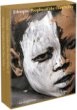
Ethiopia: Peoples of the Omo Valley
by Hans Silvester
Edition: Hardcover
Price: $64.31
Reviewed by ChicagoLarry

I hated to shell out the big bucks, but I've hit rock bottom and I admit I'm a junkie for books on places where I've been in tribal Africa. So I had to do it--and I'm glad I did.
It's hard to imagine having any books at all on tribal life anywhere in the world and not have this two-volume set. The photography and its richness of color as printed on the page just can't be topped. Is it just me, or are more people "discovering" the Omo Valley these days? It's in southern Ethiopia, where people still live much as they have for centuries--they still compete against nature for sustenance, tribes still fight each other for grazing land, women still wear goat skins and the men of some tribes still consider the most minimal of clothing optional. It is one of the few places in the world where tribal attire and body painting is the real, every-day thing--not something put on for tourists. Silvester represents it well in this set. And unlike so many coffee table books, in which any kind of meaningful narrative is catch as catch can, Silvester's narrative is informative and engaging--more anecdotal than a scholarly treatise.
Good news: no thumbnails in the back, where you have to go for captions. Captions are with the pictures, but I wish more of the pictures were captioned.
I was apprehensive about the second volume. The editorial review can be interpreted as meaning photos of the body paintings have been turned into abstract art. I didn't really want to pay for something like that. But again, I wasn't disappointed. The second volume is just photos, not photos reworked into abstract art. The art on their bodies already is abstract art. I swear, I have seen far less impressive paintings hanging in art galleries, commanding many thousands of dollars! Page after page, you will say aloud, "This is amazing!"
Some will hate Silvester's work. As we've seen in other reviews of books covering tribal Africa, there will always be some who seem embarrassed by all the nudity. They will angrily denounce such books as somehow "false," claiming such Africa no longer exists. Weird wishful thinking, I suppose, probably having something to do with internalized racism. This 2-volume set, then, is not for them. This photographer does not select for publication only those shots where an elbow or a leaf just happens to shield the viewer from prudish sensitivities. And that gives you a sense of honesty about the work. You don't feel manipulated as you might if you felt the photographer had an agenda or was trying to be gentle with you. You don't have a vague sense of wondering what else he doesn't want you to know.
The lives and culture of the Omo Valley peoples are so different from ours in the West that we can find them shocking at first take. Sylvester addresses this. "When you see how these people live, you can't help asking: 'What is a savage?' What do we understand by the term 'primitive'?" I wouldn't have used the word "savage," not even in the context of the question, because it might imply the people really are more or less savage unless granted some kind of special, sympathetic interpretation of the depiction. I would not want to remotely suggest they could be seen as "savage." (Perhaps the translation from Silvester's German wasn't the best in this instance.) In any case, once you spend time with these people--in his case, I think it was 9 trips over 3 years--the mystery and the oddities quickly become not so odd or mysterious. Should the photographer, then, produce a work that carefully considers Western unfamiliarity and shock, or a work that caters more to authenticity? He goes for the authentic.
Check out Giansanti's work, and Beckwith & Fisher. Those are great too. But don't come up short without this one, either. It will take you on a wonderful, close-up journey into the harsh but beautiful land, and the hard but beautiful lives of the people of the Omo Valley.